
Nymphenburg Palace – Munich
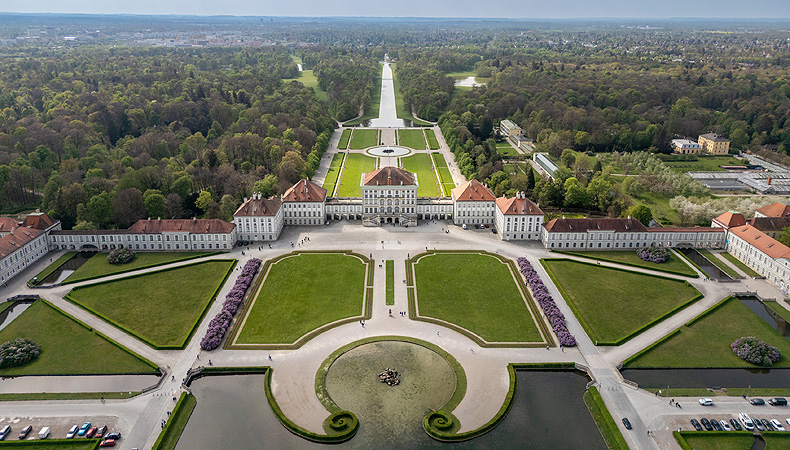
With its unique combination of architecture and garden design, the palace and park complex of Nymphenburg is one of the best examples in Europe of a synthesis of the arts. In 1664, following the birth of the heir to the throne, Max Emanuel, Elector Ferdinand Maria of Bavaria and his wife Henriette Adelaide of Savoy commissioned the architect Agostino Barelli to build Nymphenburg Palace. Elector Max Emanuel had the complex extended from 1701 with side galleries and residential pavilions designed by Henrico Zuccalli.
From 1715, Joseph Effner created the four-winged complexes on each side and modernized the façade of the central building in the French style: the country seat of Max Emanuel’s parents was now an extensive summer residence of absolutist proportions. His successor, Elector Karl Albrecht, extended Nymphenburg with the crescent on the city side.
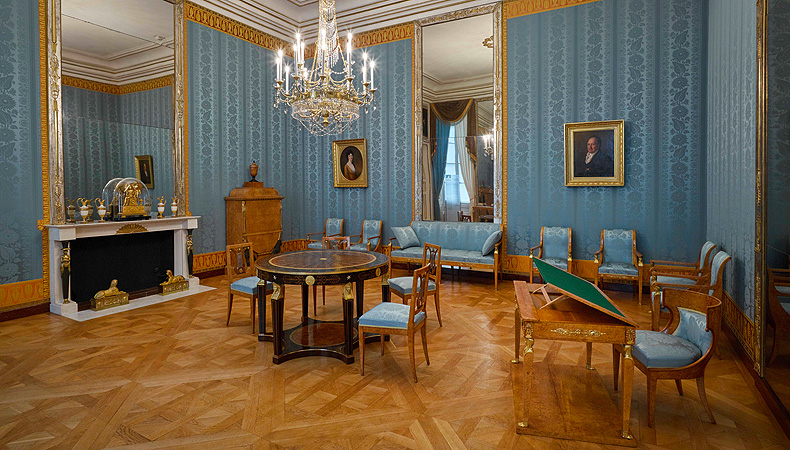
Nymphenburg Palace was extremely popular with the Bavarian rulers as a summer residence. Numerous rulers from the Wittelsbach dynasty added to the interior. The decoration of the main palace thus represents a variety of styles ranging from Baroque and Rococo to Neoclassicism.This long tradition is reflected in the Baroque ceiling paintings from the epoch of the palace’s founder, the apartments decorated with exquisite paintings and furniture and the galleries with views of Bavarian palaces and hunting lodges from the time of Elector Max Emanuel.
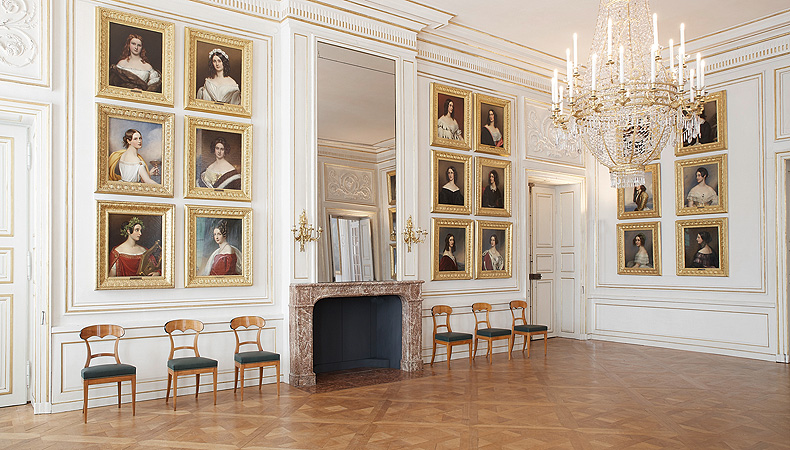
A further highlight is the light-filled Great Hall with its lively ceiling fresco and the stucco ornamentation by Johann Baptist Zimmermann in the Rococo style. The era of the Bavarian kings is represented by the residential rooms of the queen with their authentic furnishing in the court Empire style, which include the room in which King Ludwig II was born. Among the attractions of Nymphenburg is the famous Gallery of Beauties of King Ludwig I of Bavaria, for which Joseph Stieler painted 36 beautiful women from all sections of society.
Address
Schloss Nymphenburg,
Eingang 1
80638 München
089 17908-0
www.schloss-nymphenburg.de
Opening hours
April-15 October: 9 am-6 pm
16 October-March: 10 am-4 pm
open daily
Closed on: January 1, Shrove Tuesday, December 24/25/31
Guided tours
Audioguide available with costs (german, english, italian, french, spanish, portuguese, russian, turkish, chinese / mandarin and japanese)
Admission fees 2026
10 euros regular
9 euros reduced
Combination ticket "Nymphenburg"
(Nymphenburg Palace +
Park palaces +
Marstallmuseum)
1 April-15 October:
20 euros regular
18 euros reduced
16 October-31 March
(without park buildings):
16 euros regular
14 euros reduced
Tickets for the Nymphenburg palace complex are also available online in our ticket shop.
Children under 18 are admitted free of charge.
Accessibility
Getting here / parking
Munich
Tram to 'Romanplatz',
bus or tram to 'Schloss Nymphenburg'
450 car parking spaces, 14 bus parking spaces available
Further information
Free wi-fi available
During the summer season, gondola rides are offered every day (in fine weather) on the central canal. Further information can be obtained at or by calling the gondola ride number 0175 6000468.
Museum Mensch und Natur
089 179589-0
Shop
Free wifi available
Schlosswirtschaft Schwaige
089 12020890
Café im Palmenhaus
089 175309
die FASANERIE
Hartmannshofer Straße 20
80997 München
089 92284-600
Taxisgarten
Taxisstraße 12
80637 München
089 156827
Administrative office
Schloss- und Gartenverwaltung Nymphenburg
Schloss Nymphenburg,
Eingang 19
80638 München
089 17908-0
Fax 089 17908-627
sgvnymphenburg@ bsv.bayern.de
www.schloss-nymphenburg.de
