
Linderhof Palace
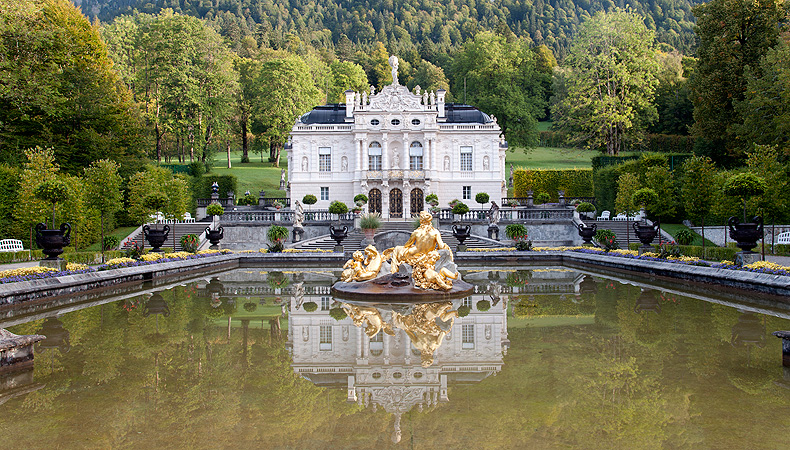
Linderhof Palace and its surrounding park is one of the most artistic and stylistically complex ensembles of the 19th century. The "Royal Villa" is the only palace King Ludwig II of Bavaria (1845–1886) was able to complete (1878). It is influenced by French architecture and modelled on the small summer palaces, usually set in parkland, that were built in France in the 18th century and were also often to be found in Germany in the parks of larger palaces.
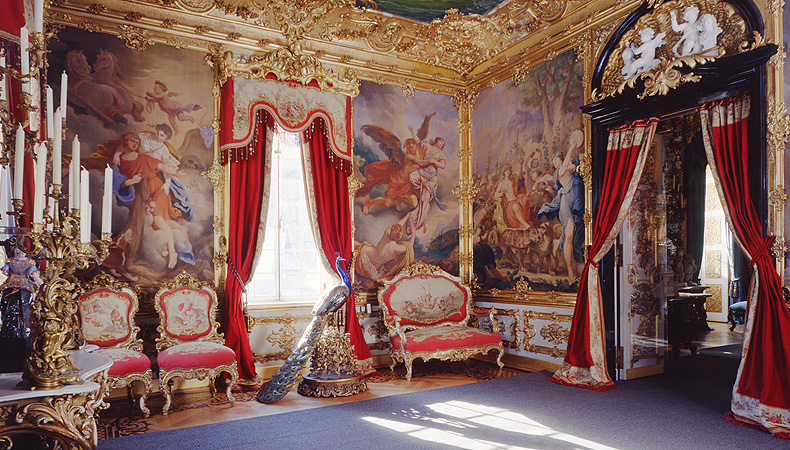
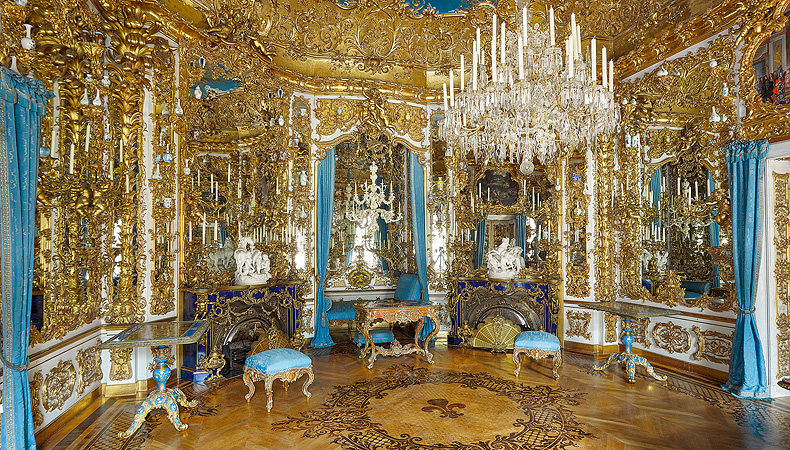
Behind the Baroque façade is a Rococo world with motifs from the age of Louis XV of France. Ludwig’s creation in the Second Rococo or Neo-Rococo style, however, shows a strong South German influence: Ludwig took over a great deal from the Rococo legacy of his own ancestors with which he was familiar from his childhood, such as the Amalienburg in Nymphenburg and the Ornate Rooms of the Munich Residence.
The rich and abundant ornamentation, with its many sculptural elements, is thus not merely an attempt at imitation. In Linderhof Palace Ludwig II created rooms of such sumptuousness that they far surpass everything that inspired them, as well as showing workmanship of an incomparable artistic quality.
Since 2025, the palaces of King Ludwig II of Bavaria – Neuschwanstein, Linderhof, Herrenchiemsee and the King's House on Schachen – have been UNESCO World Heritage Sites.
Address
Linderhof 12
82488 Ettal
08822 9203-0
für Anfragen/for inquiries:
08822 9203-49
www.schlosslinderhof.de
Opening hours
15 April-15 October: 9 am-6 pm
16 October-14 April: 10 am-4.30 pm
open daily
Tickets on sale
15 April-15 October: 8.30 am-5.30 pm
16 October-14 April: 9.30 am-4 pm
Guided tours only
Closed on: January 1, Shrove Tuesday, December 24/25/31
Guided tours
The visit of the palace is only possible with a guided tour; we offer guided tours in German and English (approximately 25 minutes).
Admission fees 2026
Combination ticket
(Palace + Venus Grotto)
18 euros regular
16 euros reduced
(only available to a limited extent at the ticket office on site)
Linderhof Palace
11 euros regular
10 euros reduced
The "Linderhof Palace" ticket is also available online in our ticket shop.
Children under 18 are admitted free of charge.
Accessibility
Water features
From mid April to mid-October daily 9 am-6 pm
Fountain every 30 minutes
Getting here / parking
Oberau or
Oberammergau
Bus to ‘Linderhof’
550 car parking spaces, 14 bus parking spaces (with costs)
Further information
Free wi-fi available
Ludwig's Bistro & Geschenke
08822 209
Administrative office
Schloss- und Gartenverwaltung Linderhof
Linderhof 12
82488 Ettal
08822 9203-0
für Anfragen/for inquiries:
08822 9203-49
Fax 08822 9203-11
sgvlinderhof@ bsv.bayern.de
www.schlosslinderhof.de
